The Law of30.
The deadline no one tells you about — and how to beat it.
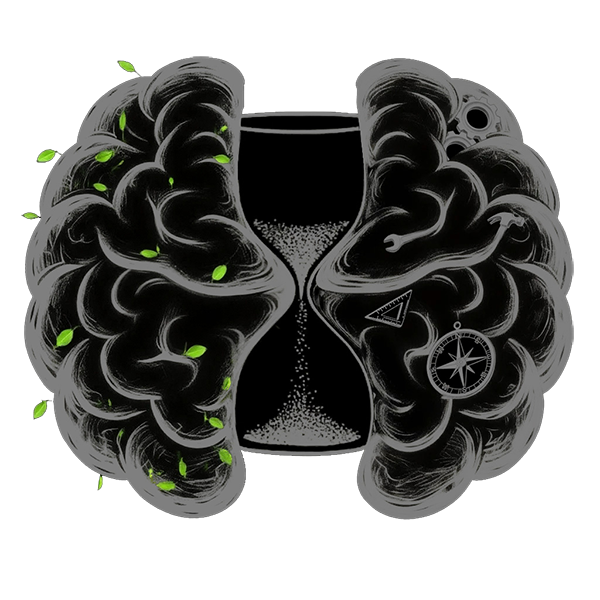
It is well for the world that, in most of us, by the age of thirty, the character has set like plaster — and will never soften again.
A cigarette burn flickers in the corner of your life.
In the golden age of cinema, projectionists watched for a tiny flash in the upper-right corner of the screen — a cue to switch reels before the audience noticed. Once you knew about it, you couldn't unsee it. Every fifteen minutes, the spell broke.
The Law of 30 works the same way. Around age thirty, neurological pruning, personality stabilization, environmental momentum, and cultural pressure begin to reinforce each other in a way that quietly determines which strategies for change will work, and which will fail.
This is not a book about running out of time. It's a book about running on the right clock.
The tragedy isn't that change becomes harder. The tragedy is that millions of people waste decades using strategies designed for the wrong phase of life.From Chapter 14 · The Productivity Paradox
Three stages, three different games.
The strategies that work at 25 will fail at 35 because the game has changed. Each phase requires its own rules.
Before 30
"Pour the foundation. Build strong defaults."
Your prefrontal cortex is still finalizing. Synaptic pruning is choosing which patterns to keep. You are, almost literally, deciding which version of you to install.
- Identify the gaps you want to resolve
- Use strategic discomfort to forge defaults
- Stop juggling habits — start stacking them
- Adopt identities, not intentions
Turning 30
"Be ruthlessly honest about who you actually are."
The construction window is closing. You need a clear-eyed audit before the plaster fully sets.
- Practice draconian prioritization
- Coin your crisis — name what's actually here
- Avoid surface-level "transformation" theatre
- Document your real defaults — flaws included
After 30
"Stop changing your nature. Engineer your environment."
Your toolset is mature. Trying to transform it now is exhausting and rarely successful. The leverage shifts entirely — from you to the world around you.
- Engineer environments that match your defaults
- Weaponize forcing functions and external structure
- Partner around your weaknesses
- Deploy compound interest, not redemption resets
Five uncomfortable truths hiding in plain sight.
The Myth of Perpetual Plasticity
The comforting story that you can become anyone, at any time, with enough willpower. It sells a $13B industry. It also sets up most of its consumers to fail and then blame themselves.
Set Like Plaster
Repeated behaviors create neural pathways that grow harder to alter with age. By thirty, James observed, character has set: not because change is forbidden, but because the medium has hardened.
The Splice Point
The transition you can't see from the inside. Once you know it exists, you can spot it everywhere: in the friend who keeps "starting fresh," the colleague stuck in identical loops, the version of yourself you keep promising to become.
Automaticity Formation Capacity
You can't measure it directly. Only its shadow. A multiplicative function of neuroplasticity, sleep, stress, social support, and context stability. After thirty, the shadow shifts. Smooth curves break.
The Trust Infrastructure
If post-30 transformation were truly easy, expertise would never compound, partnerships would dissolve, and trust would require constant renegotiation.
The Redemption Trap
Tactical redemption ("I can act better") is real and available at any age. Fundamental transformation ("I can become a different person") is not. Confusing them keeps people on endless self-help loops, never deploying the self they already have.
Once you've been made aware of the splice point, you'll start seeing the transition points in those around you — where they could have changed, where they didn't, and why their strategy for change was counterproductive all along.From Chapter 1 · The Cigarette Burn Effect
Your personality has five dimensions. By thirty, their rank order locks.
The Big Five framework — psychology's most cumulative and influential model — captures the operating system beneath your habits. After thirty, you can dial these traits up or down slightly. Switching their rank order is rare. Map yours, and you stop fighting yourself.
Stop trying to remake yourself. Engineer the world around you so that your flaws become irrelevant — and your strengths become your superpowers.
 The Author · 2026